Designed for Today
Reducing Human Error Through Digital Colposcopy
Digital colposcopy enhances visualization, documentation, and clinical collaboration while helping reduce opportunities for human error during the examination. Unlike traditional optical systems that limit viewing to binocular eyepieces and depend on manual transcription, the Lutech LT-300HD captures high-resolution images that create a consistent visual record of findings. This documentation supports assessment, comparison over time, consultation, and continuity of care while reducing reliance on memory, interpretation, and/or incomplete notes.
Supporting Studies
Colposcopy is inherently dependent on examiner interpretation. In their study of transformation-zone assessment, Vallikad et al. (2017) found moderate inter-observer agreement and moderate-to-strong intra-observer agreement in classifying the transformation zone and identifying the squamocolumnar junction. Similarly, Sellors et al. (1990) reported disagreement among experienced colposcopists when evaluating the squamocolumnar junction and features of atypical transformation zones, concluding that inconsistent interpretation can substantially affect the reporting of colposcopic findings. These studies show that capturing images for later review, comparison, and consultation can help reduce the variations associated with optical colposcopy’s incomplete documentation.
Digital colposcopy reduces these error-prone steps in several ways. It creates a visual record for review and supports second opinions and consultation. The images support training, continued care and review, and consistency in documentation.
Documentation Standards
ASCCP colposcopy standards emphasize structured recording of key findings, including lesion presence, location, and size; cervical visualization; squamocolumnar-junction visibility; colposcopic impression; and biopsy details. A digital image record reinforces these standards by preserving what clinicians see during the examination and making it easier to verify lesion location, communicate findings, and support follow-up care.
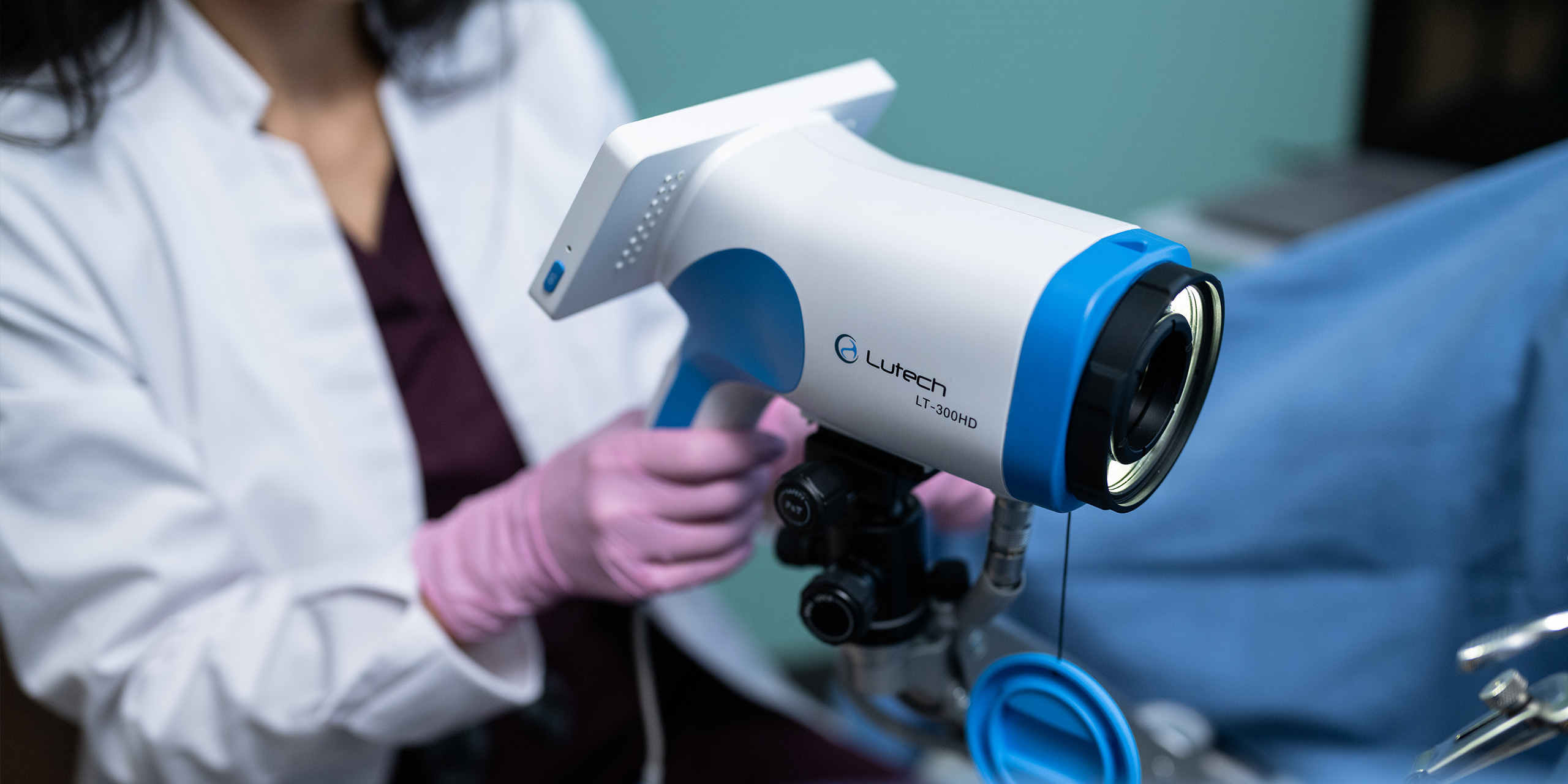
Lutech’s LT-300HD colposcope supports standardized documentation for medical imaging and legal evidence. The digital system captures HD imagery and seamlessly uploads the visual documentation to electronic patient records.
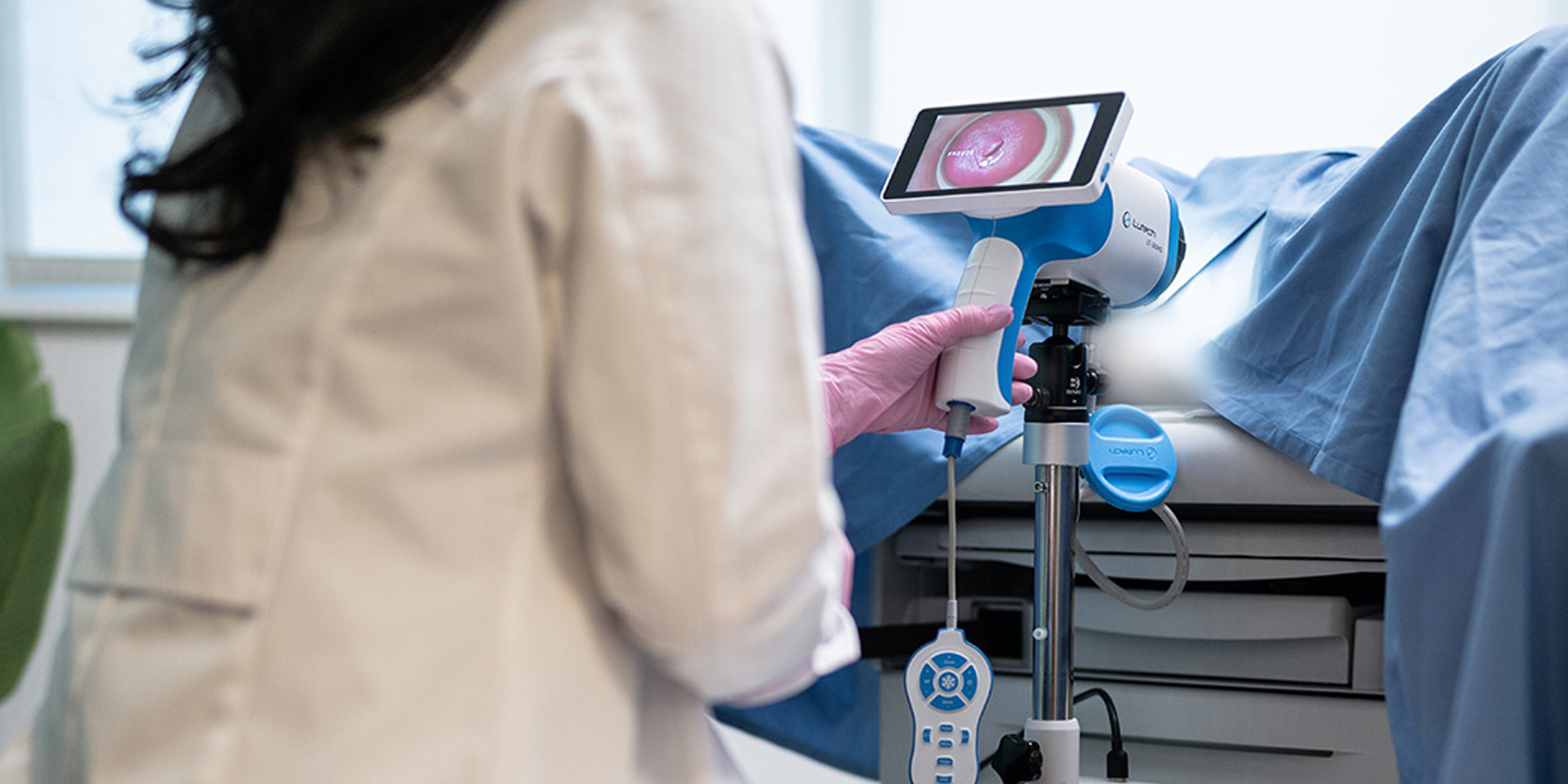
The LT-300HD uses a high-definition, screen-based viewing system. Zoom and fine-focus controls allow clinicians to view targeted abnormal tissue on the integrated display or an external monitor. Clinicians can perform the procedure or evaluation while looking at the 5.5 inch device screen, capture HD images hands-free, and upload the visual documentation to the patient’s electronic record. Lutech’s direct visualization and image capture help reduce the errors associated with manual and incomplete documentation.
Designed for a Modern Exam
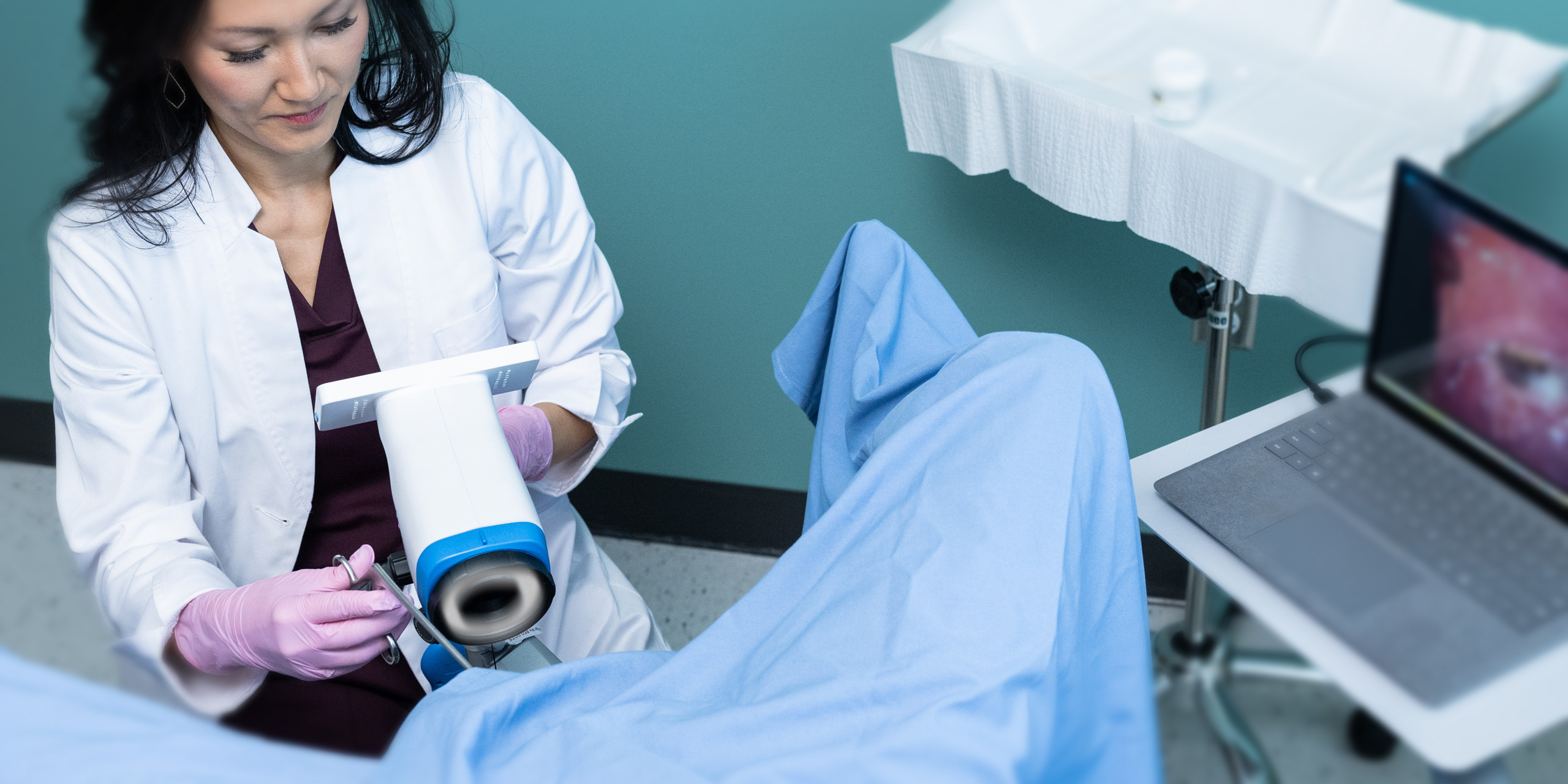
Traditional optical colposcopes require clinicians to look through binocular eyepieces during the examination. For clinicians who currently use an optical colposcope, Lutech’s digital system primarily changes their viewing position. Instead of leaning forward to use binocular eyepieces, clinicians sit upright and view the examination on a digital display.
With the Lutech LT-300HD, clinicians conduct the examination while maintaining access to the patient and necessary instruments. They remain upright, keep the colposcope in position, perform the procedure, and communicate easily with the patient throughout the examination.
The new 5.5-inch display makes screen-based viewing a more prominent part of the device. Intuitive digital controls, including up to 30x zoom magnification, green filters for vascular visualization, brightness, and fine focus allow clinicians to adjust the view while monitoring the image on the integrated display. Adjustable LED illumination and an anti-glare lens help reduce shadows and glare.
Hands-free image capture, electronic health record integration, and the ability for remote consultation help clinicians standardize documentation and streamline clinical workflows. Clinicians can capture images without interrupting the examination, associate visual findings with the patient record, and share images with colleagues for consultation when needed. These capabilities support efficient review, clearer communication, and continuity of care across clinical teams.
Lutech’s digital system is available with different stand configurations, allowing practices to select a setup that works for their available space and existing exam-room workflow.
Moving Beyond Traditional Colposcopy
Lutech’s approach differs. The LT-300HD incorporates a larger 5.5-inch integrated screen, providing a broader viewing area directly on the colposcope. The digital system captures HD images and allows for uploading the visual documentation to the patient’s electronic record. It also can connect to an external monitor to help clinicians share and explain findings to patients in real time during the examination. Together, these features provide a modern alternative to the traditional optical colposcope.
Ready to see the difference?
Schedule a demonstration of the LT-300HD to see how digital colposcopy can support modern examinations, consistent clinical documentation, and collaborative patient care.
Mayeaux, E. J., Jr., Novetsky, A. P., Chelmow, D., Garcia, F., Choma, K., Liu, A. H., Papasozomenos, T., Einstein, M. H., Massad, L. S., Wentzensen, N., Waxman, A. G., Conageski, C., Khan, M. J., & Huh, W. K. (2017). ASCCP colposcopy standards: Colposcopy quality improvement recommendations for the United States. Journal of Lower Genital Tract Disease, 21(4), 242–248.
Sellors, J. W., Nieminen, P., Vesterinen, E., & Paavonen, J. (1990). Observer variability in the scoring of colpophotographs. Obstetrics & Gynecology, 76(6), 1006–1008.
Vallikad, E., Siddartha, P. T., Kulkarni, K. A., Firtion, C., Keswarpu, P., Vajinepalli, P., Naik, S., & Gupta, L. (2017). Intra and inter-observer variability of transformation zone assessment in colposcopy: A qualitative and quantitative study. Journal of Clinical and Diagnostic Research, 11(1), XC04–XC06.